
TL;DR
AI can dramatically improve content production speed, but it cannot replace human creativity, judgement or strategic thinking. This article explains the strengths and limitations of AI in content creation, why human input remains essential, and how businesses can balance both through structured AI content creation training.
The Myth of AI Replacing Human Creativity
One of the most common fears surrounding AI content creation is that machines will replace human creators.
In reality, AI excels at pattern recognition and efficiency, not originality or lived experience. It generates content based on existing data rather than true creativity.
Human creators, on the other hand, bring:
- Emotional intelligence
- Cultural and contextual understanding
- Strategic decision-making
- Original perspectives
Effective content creation combines both.
What AI Does Well in Content Creation
AI tools are highly effective at specific, repeatable tasks.
Speed and Scale
AI can generate drafts, outlines and variations in seconds—ideal for:
- Blog first drafts
- Social media captions
- Email subject lines
- Ad copy testing
This frees up human creators to focus on refinement and strategy.
Pattern Recognition and Optimisation
AI excels at analysing large datasets to identify:
- Common content structures
- Keyword patterns
- Readability improvements
This makes AI especially useful for SEO-driven content when paired with editorial oversight.
Content Repurposing
AI helps turn one piece of content into many:
- Blog posts into social snippets
- Articles into video scripts
- Long-form content into summaries
This capability supports efficient content ecosystems, as explained in.
Where Human Creativity Remains Essential
Despite its strengths, AI has clear limitations.
Strategic Thinking
AI cannot:
- Define business objectives
- Understand nuanced customer pain points
- Align content with brand positioning
Humans set direction; AI supports execution.
Emotional Connection and Storytelling
AI struggles to:
- Create emotionally resonant stories
- Reflect lived experiences
- Respond authentically to social or cultural nuance
Human creators are essential for building trust and connection.
Ethical Judgement and Accountability
AI does not understand ethics—it follows patterns.
Human oversight ensures:
- Accuracy and responsibility
- Brand integrity
- Compliance with industry standards
This is why ethical considerations, discussed in Ethical AI Content Creation: What Businesses Need to Know, are critical.
The Risk of Over-Automating Content Creation
Competitor analysis shows that many businesses misuse AI by:
- Publishing unedited AI output
- Relying on AI for sensitive topics
- Removing human review entirely
This often leads to:
- Generic content
- Brand dilution
- SEO underperformance
AI content creation training helps teams avoid these risks by teaching balance and governance.
How AI and Humans Work Best Together
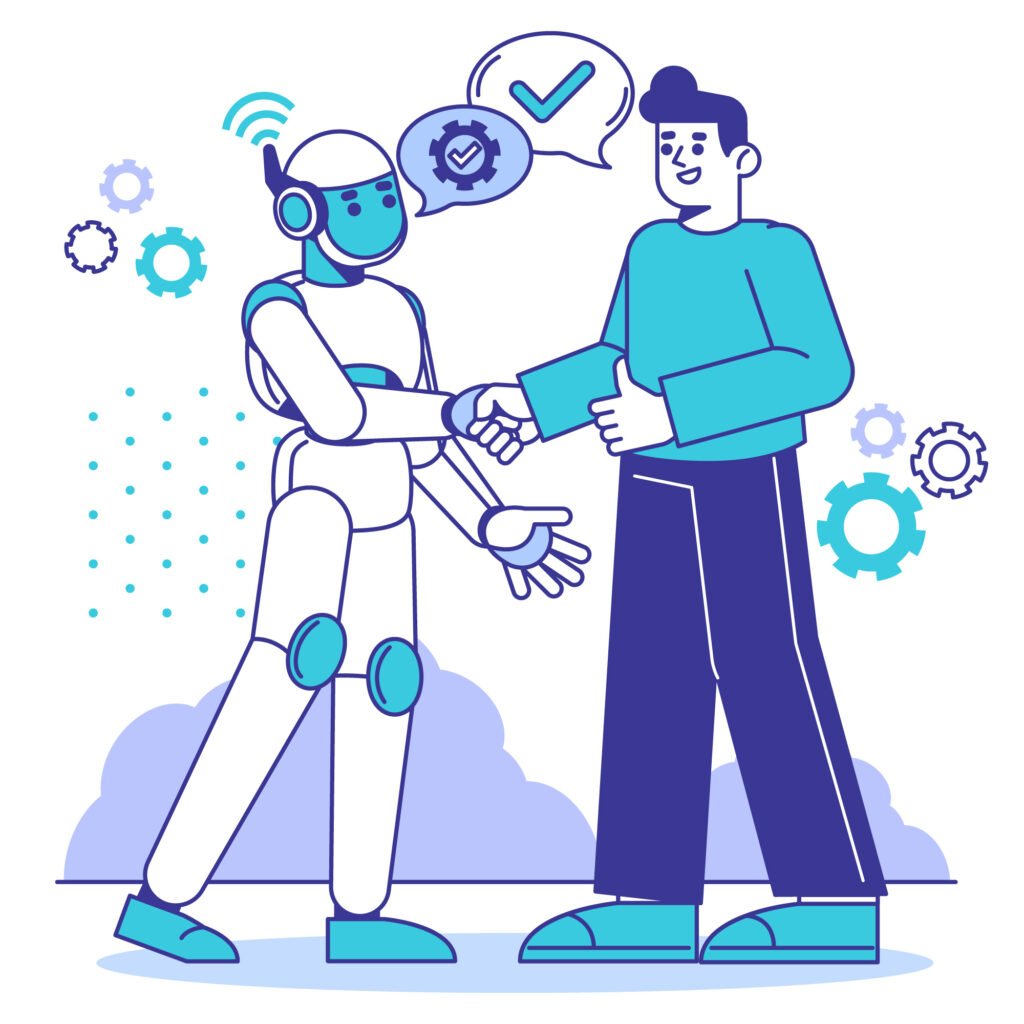
The most effective content workflows use AI and humans collaboratively.
A Balanced Content Workflow
- Humans define goals, audience and tone
- AI assists with research and drafting
- Humans refine, fact-check and personalise
- AI supports optimisation and repurposing
This approach improves efficiency without sacrificing quality.
Training Enables Better Collaboration
Without training, teams often struggle to integrate AI meaningfully.
AI content creation training helps teams learn:
- When to use AI
- When not to use AI
- How to evaluate AI outputs critically
This shared understanding improves consistency and results.
Creativity in a Singapore Business Context
In competitive markets like Singapore, originality and trust are key differentiators.
AI can support efficiency, but businesses still rely on human creativity to:
- Communicate local relevance
- Build authentic brand narratives
- Respond to audience expectations
Localised training ensures AI is applied thoughtfully rather than mechanically.
Balancing AI and Creativity for Long-Term Growth
Businesses that succeed with AI focus on:
- Augmenting creativity, not replacing it
- Investing in skills, not just tools
- Establishing ethical and quality standards
This philosophy aligns closely with the principles outlined in The Ultimate Guide to AI Content Creation Training for Businesses.
FAQs: AI and Human Creativity in Content Creation
No. AI supports productivity but lacks originality, emotional intelligence and strategic judgement.
AI can produce creative-looking outputs, but true creativity comes from human insight and experience.
By using strong prompts, adding human editing and applying brand voice guidelines consistently.
Not when used correctly. Quality improves when AI is combined with skilled human oversight.
Training teaches teams how to use AI strategically while preserving originality, ethics and brand integrity.
Yes, but the level of human involvement varies—especially in regulated or trust-based industries.
If you’re looking for AI Content Creation Training, whatsapp me below for a customised solution for your company.